Chateauing: The Series, Part One – April 2026
By Kris Hicks
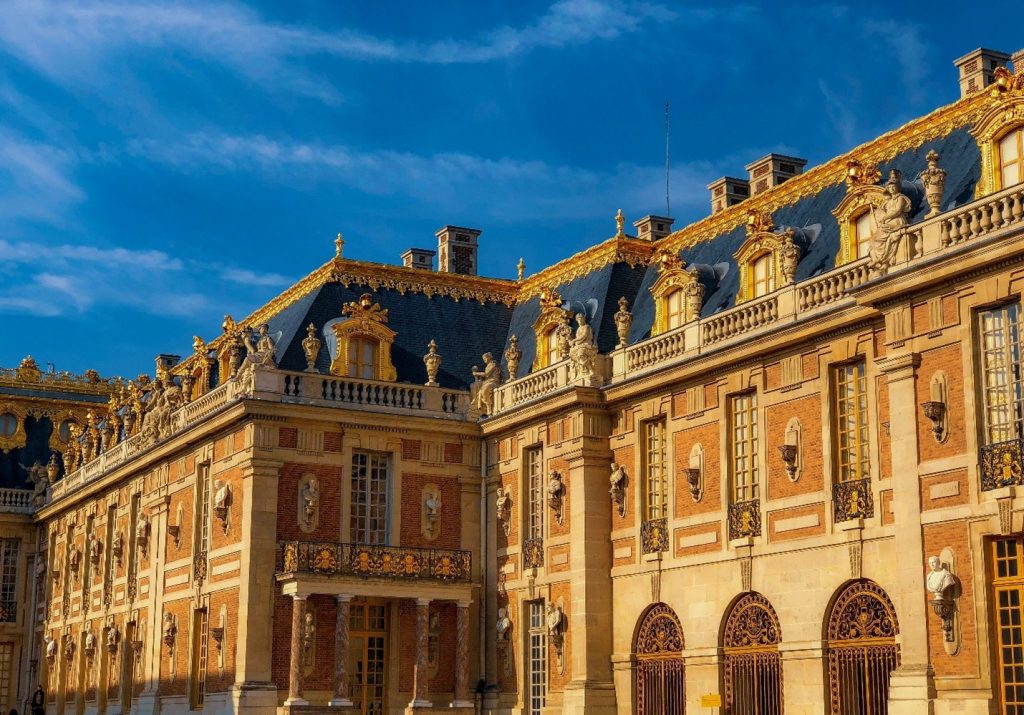
I am often asked what I most enjoy doing and/or seeing when I visit France. Is it the food, markets, or the iconic sites? My answer is always yes, I love them all, but visiting a château, or “châteauxing”, is my favorite experience. I love to visit, explore, research, and experience châteaux.
You’ve never heard the word châteauxing? I suspect not, since I invented it! Châteauxing is the experience of enjoying and exploring a château.
As I thought of topics for my blog, it became clear to me that I wanted to share with you my passion for châteaux. The result is the start of a series titled “Châteauxing”. In this series you will see some well-known and not-so-well-known châteaux.
I decided to kick off the series with four châteaux that I have visited and are within 1 ½ hours from Paris.
1. Château de Versailles: Echoes of court life
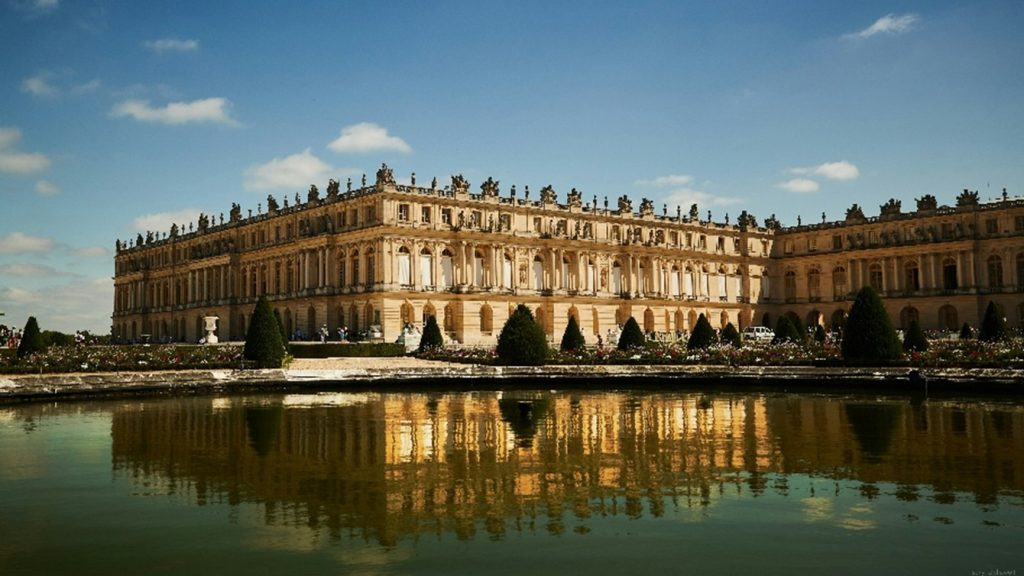
Generally, most people are familiar with the Versailles as the beautiful place where Marie Antoinette lived prior to returning to Paris and meeting her demise. But there is a significant portion of French history that took place there before she arrived.
Versailles was built by Louis XIV. He expanded his father’s rustic hunting lodge to become the place we know today. With the reign of Louis XIV, Versailles became the center of the French government, a showpiece of French culture and an opportunity to monitor the activities of the court. Intrigue was an ever-present activity here.
Residing at Versailles was a requirement for the court. While it is a large château, you can imagine how crowded it was with between 5,000 and 10,000 courtiers and servants. In addition, Versailles had a very strict code of etiquette. Louis XIV’s brother, called Monsieur, created the etiquette code. Some of the requirements were:
- Stamp your foot rather than knock prior to entering
- Never show your back to the king or higher ranking nobles
- Ask permission to leave a room from higher ranking nobles
If you have never been to Versailles, I would suggest a visit next time you’re in France. Walking up the cobblestone entryway towards the statue of Louis XIV (known as “The Sun King”) is impressive, and at that point you haven’t even been inside yet! You will see where Marie Antoinette slept, the chapel where she married Louis XVI, the theater where she acted on stage and where the courtiers lived. A further suggestion would be to arrive at Versailles when it opens at 9:00am (Paris time), before the crowds of tour buses arrive at 10:00am. Note that Versailles is closed on Mondays.
A unique characteristic of Versailles is the kitchens, which were located away from the main palace. I thought the primary reason was the concern for fire, but it was of equal importance to avoid odors and noise. The result was cold food at the dining table!
In addition to the main palace, there are the Petit and Grand Trianons, smaller châteaux on Versailles’ grounds. Louis XVI had the Trianons built for Marie Antoinette as an escape from the pressure and etiquette at Versailles. Additionally, there is a hamlet built where Marie Antoinette could live a country life, complete with farm animals and a small pond.
2. Château de Saint-Germain-en-Laye: Once a royal castle, now a national museum
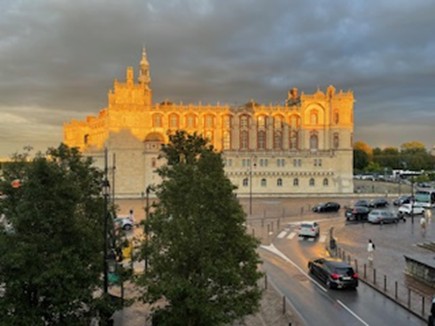
France has an impressive archaeology museum in Saint-Germain-en-Laye. But, before it was a museum, it was a royal château. In fact, Louis XIV was born and lived in the Saint-Germain-en-Laye château until he moved to Versailles.
The château was originally built as a medieval fortress. While Versailles is shaped like the letter ”U”, the Saint-Germain-en-Laye château is shaped in the form of a circle, which at one time had a moat and drawbridge. There is a courtyard that was used to support the château’s day-to-day activities, but was located strategically within the walls for protection. Within the interior of the château today, there are impressive archaeological exhibits hosted by the National Archaeological Museum.
While you cannot tour the entire château, you will see signs of its past royal designation. If you look closely you will find examples of door and window hardware such as the keyhole below. The “F” is for Francis I who also lived here during his reign.
Upon further exploration, you will see the chapel integrated in the circular structure. Today the chapel is empty (no pews, altars, etc.), but the sun shining through the green tinted windows creates a magical atmosphere. Walking around the interior you will see religious carvings and areas where religious items (baptismal font, etc.) were located. Take some time in the chapel, it is time well spent.
In the early nineteenth century, Napoleon used the château as an officer’s training school. The treaty between the World War I allies and Austria was signed here.
Once you exit the château, turn right and enjoy a walk in the garden. The garden was part of the royal grounds and to this day is a center point of Saint-Germain-en-Laye’s cultural heritage. Keep walking to your right and you will have a beautiful view of Paris.
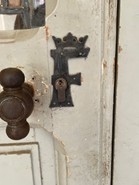
“F” for Francis I, king of France, a small detail from the château’s royal past.

Sunlight fills the chapel with a soft light, providing a moment to stop and reflect.
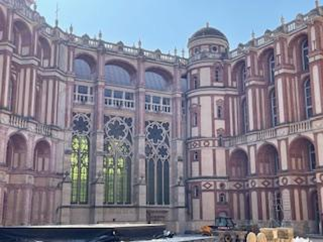
Here is the inner courtyard, where daily life once unfolded inside the château walls.
3. Château de Malmaison: Bridging American and French history
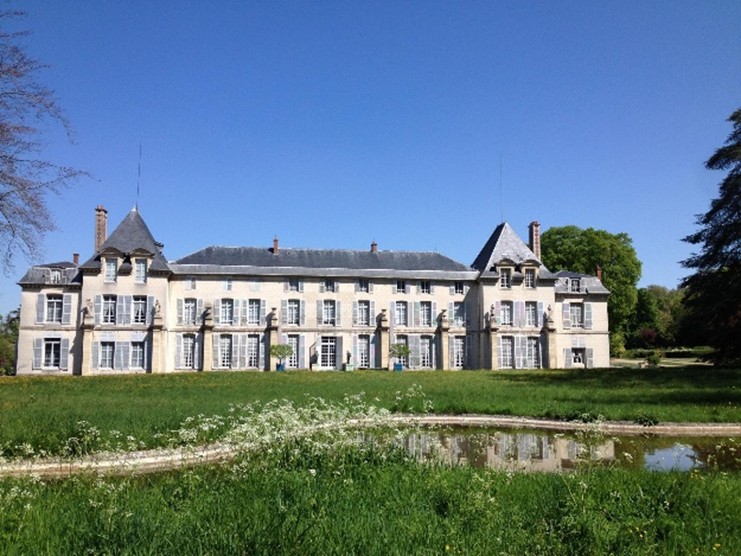
Malmaison has the dual honor of being the headquarters for the French government from 1800-1802 and the home of Joséphine and Napoleon Bonaparte. Joséphine purchased the château and undertook a massive renovation to turn it into her home. Joséphine would reside here from 1799 to 1814, when she died.
When Joséphine purchased Malmaison, it was run down. In addition to renovating the château itself, she worked with gardeners to turn Malmaison’s gardens into the envy of France. The import of exotic and rare plants along with the construction of a heated orangery for the 300 pineapple plants created a château of peace and tranquility. Napoleon would return to relax and work before returning to battle. Malmaison became a home.
When you explore Malmaison, you will be taking a step back in time. The furnishings, décor and rooms have been returned to a time when Joséphine lived there. There is an intimacy to Malmaison that I do not often find in a château. Take your time when you explore this space, it will be worth it. I can’t wait to return. I still have more to experience.
4. Château de Monte Cristo: Where novels come to life

It is probably no surprise that Alexander Dumas named his home Château de Monte Cristo after his successful novel The Count of Monte Cristo. This château was Dumas’ primary residence, and you feel that as you walk through and enjoy the three floors. A unique feature of this visit is the Moorish salon. I had never seen a Moorish decorated room in a French château.
As you walk through the château, you will quickly realize how important this place was to him. You will see many personal items – portraits of his father, writings, etc. Dumas led a very interesting life.


In addition, across the small lawn is a pavilion where Dumas wrote. The pavilion was named Château d’If, after another setting in The Count of Monte Cristo.
Dumas called the Château de Monte Cristo «paradise on earth». Dumas will always be known as a significant French author and playwright.
I hope you have enjoyed the first installment of my château series. Watch for future châteauxing blogs. I have a very exciting visit to France planned in April and May. I am going on a tour of the Provence region (not my first visit) and I cannot wait to share my experiences with you. And yes, I will be speaking a lot of French! So pour yourself a glass of wine and enjoy the journey.
Allons–y!